
How Art Gets Around
We don’t often think of art on the move, but it might regularly travel from once place to another, perhaps from your own studio to a client, gallery or museum. This is a vulnerable time for artwork, so it’s best to do a little preparation and not leave it to the last minute. Since this is a frame shop, we will stick to 2D work and speaking of frames, this is a great first line of defense. Frames can help protect against lots of potential hazards including slight shifts in temperature or humidity, water damage, dust, even dents and dings.
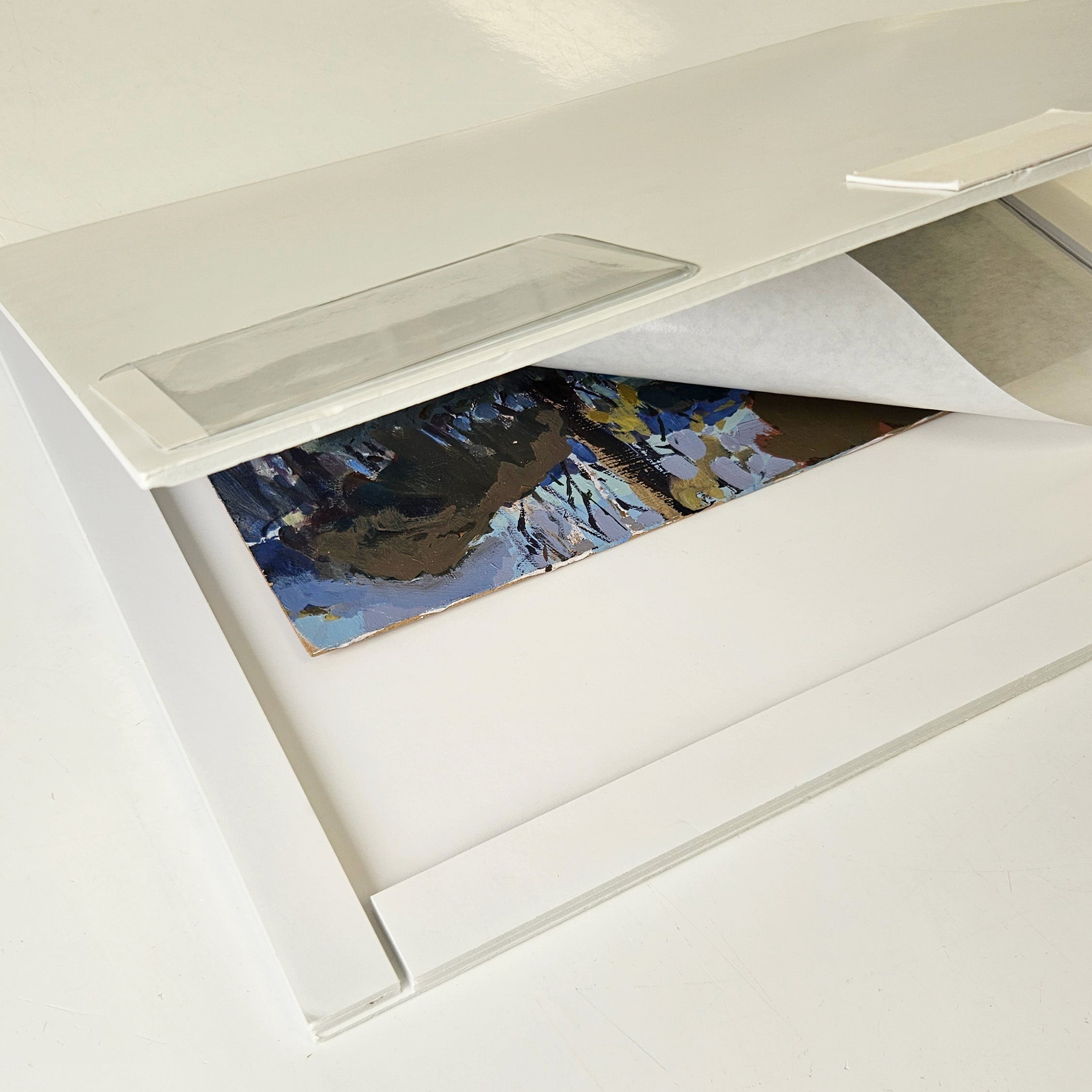
You might be saying to yourself, “how do I safely get my art to the frame shop though?” This is a great question. Start by protecting the surface and work your way out. Is your work a fragile material, such as pastel, charcoal or collage? Use a nonstick “interleaving” like glassine. For other more stable drawings, prints or even photography a buffered tissue might be the best option for you. Clean white cotton paper is often a good option too.
Okay, now that the surface is covered, let’s find a ridged surface for those works on paper. Carboard is a great option, even better if acid free, especially if you plan to leave it this way for any duration. Foamcore is great for this purpose too. Generally, two pieces are recommended, one for the top and bottom of your work. Remember to make them bigger than the artwork, at least 4 inches extra for length and width, this leaves you with a two-inch perimeter to work with. Think of it like a sandwich with your art in the middle. But before you close it up, secure the art to the bottom board in a safe way so it does not slip or shift. The most common option is “photo corners” and they are super easy to make yourself and you can use any clean sturdy paper you have on hand. Mark which side is the face so you don’t accidentally flip it over now that you can’t see it.
Alright, so now you have your enclosed artwork. If you can use painters’ tape or another trusty tape to close it all up at a couple points on each of the four sides. You want it to be easy enough to open again in the future when you’re showing it off or working with your trusted framer.
This might be good enough for local travel in a car, but again if you’re concerned at all about the surface, keep in horizontal, or as its colloquially called, a “ride flat.” Key takeaway, leave the creativity to the art and pack sensibly. Aim for materials that are clean, dry and large enough to fit around your art. Tempting as it may be, try to not skimp on materials at this point.
More to come on packing up art for shipping and long-term storage.